Wednesday, 27 April 2016

Rio Olympics face challenges

With Rio Olympics only 100 days to start with, Brazil, a country famous for doing last minute preparations is facing twin challenges in economy and politics. Reports are that Brazil has already prepared the games venues but is not sure about appearances.


Apart from economy and politics being the most delicate issues in the country to deal with, the Brazilian President’s ‘fighting impeachment’ made the people ‘angry and distracted’.
According to reports, the Rio residents are not paying added attention to the quadrennial extravaganza as ‘there are so many other things to talk about.’ In the last four years after Brazil was selected as the host country of Olympics 2016, with more than 30 million people were lead to poverty making Brazil face a meltdown in economy.
Even players, excited to represent their country in the Olympics, said: “Brazil is going through a political crisis, and the situation has still to sort itself out. I think we just need to resolve the politics, and then people's attention will turn to sport.”


Apart from politics and economy, health and crime are the officially declared issues impacting the Rio Olympics. With a massive of Zika virus that caused widespread panic and death, athletes and players are rejecting their names from the Olympics list.
Plus, drug and human trafficking, murder and other criminal activities have now become common reasons to rebuff Rio’s prospects. A government statistics showed that as many as 432 people were murdered in the city in the first quarter of this year.  


Nepal Gets Its First Female Muslim Lawyer, Hope Surrounds Women’s Career

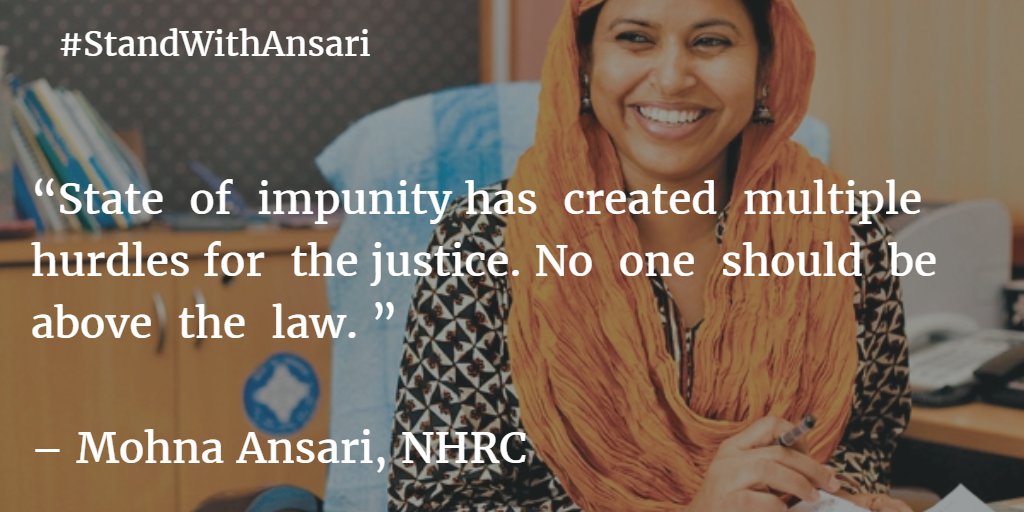
Mohna Ansari, Nepal’s first female lawyer and a Muslim bring a ray of hope for the Nepalese women who are now ‘slowly coming up’. Ansari is the country’s first female Muslim lawyer and a Commissioner at the Nepal Human Rights Commission (NHRC), said reports. Also, she is the first to become a graduate in her family.  


“The new constitutional amendments give them a ray of hope,” says Ansari who belongs to a lower middle class family in Nepalgunj, a small town in the southern fringe of the Himalayan country. Mohna Ansari joined the NHRC as a Commissioner on November 2014, after she received a call from the Nepal government that asked her to join the five-member commission that tackles issues like security force excesses and gender discrimination in Nepal.
Reports are that before Ansari started working at NHRC, she had her first government assignment at the National Women Commission (NWC) for four years where she was a Commissioner too. She worked at NWC from 2010 on a United Nations Development Programme project. “This was the first time a Muslim (woman) was appointed at such a high level,” asserted Ansari who is quite active in social media.


Reports are that Mohna’s rise as a Muslim woman in a post in the government body is a result of ‘the change that has been taking place in Nepal since the monarchy was abolished in 2006 - after a decade of Maoist rebellion,’ sources said. Mohna is also the first woman, from a NGO background who understands the issues and addresses problems faced by ordinary people of Nepal. Her social media accounts are flooded with such complaints and shares that address women’s and indigenous rights, issues of the Madhesis and delays in post-earthquake reconstruction.


“I was the first to oppose the deployment of the army to deal with Madhesi agitation. I was the first to speak publicly against that,” she said while referring to recent protests by the Madhesis who occupies more than a third of the Nepal’s population but are economically and politically underrepresented.
The blazing career today saw a lot of problems during her early days. The 39-year-old, soft-speaking lady said that her family was completely dependent upon her father’s carpentry shops but she went to school and completed her study. With a graduation degree in law, Ansari said she faced a lot of problem again when she wanted to work as a full-time lawyer because she was a Muslim lady. “It was too difficult to begin my career in Kathmandu with my background. My family supported me all along,” Mohna said while sharing her work experience.


Western Fashion Brands Struggle To Compete With Asian Counterparts

With Asian consumers getting more confident about their home grown brands, Fashion brands from China, Japan and South Korea are prevailing the market. Along with this, the Asian consumers are considered as the world’s biggest buyers of high-end fashion brands and products and represent almost half of the significant consumers, said reports.
Compared to the leading western brands, the Asian brands are young and mostly are belongs to the first generation of designers. Reports are that most of the Asian brand- owner are within 35-years of age, is tech-savvy and always in search for different fashion staples ‘that will make them stand out and look different.’ Also, these fashion brands are always ready to experiment with textile and materials, and hunts for ‘small, cool and original features’ in their designs.


According to reports, the Asian brands, mostly from China, Japan and South Korea is considered as a ‘growing threat from the East’ by the big western brands like Prada, Tod and Kering’s Bottega Veneta. Also, brands like Ms Min and Comme moi from China are growing fast and getting sold at the departmental stores of Lane Crawford.
“You sense there is a pride about seeing China develop its own creative community and seeing China emerge as a creative force,” Lane Crawford chairman Andrew Keith told. Most of the Chinese fashion brand products are sold online, to the Chinese nationals living abroad to offer them a sense of their home-grown brands.


Following the home-grown brands, the south-Asian countries now are sponsored by local industrial brands to organize fashion week to encourage the budding brands. Fashion brands, which were always thought as a cup of tea of the western countries, have now shifted the notion.

Korean electronics company Samsung’s fashion division chairman said: “Before many Asians thought luxury goods had to come from the West. But they are becoming more sophisticated and discerning and now more people are interested in local designers who have their own point of view and unique style.”

Apple Reports First Sales Drop In 13 Years

Tech giant Apple Inc. on Tuesday reported its first ever sales decline in iPhone sales in 13 years. Apple said that they have sold 10 million lesser iPhones in the first quarter of 2016 compared to 2015’s first economic quarter.

The report was released by Apple CEO Tim Cook, who, after declaring the decline in sales, has asserted: “The future of Apple is very bright.” Reports are that the ‘slide is putting more pressure’ on the company to come up with innovative products. Also, as Cook has asserted, the slide might be a result of ‘increasingly saturated market’ of smart phones.

According to reports, Apple’s slowdown in the market was followed by Microsoft Corp., Google owner Alphabet Inc. and Twitter, who posted ‘reports of missed expectations’ in the first quarter of 2016. Apple said its share fell about 8 percent as a result of about 50 million lesser sales of devices. Also Apple has dropped its sales in China to the most, the second largest market of the tech giant after USA being.
Market analysts have earlier reported of Apple’s decline in sales fearing that the company has reached its saturation point; many also termed the growth as ‘exponential’. A way-out from the hitch was also referred by market analyst: “Apple needs to come up with a radical new innovation or product rather than just the current incremental improvements to existing products. This is the only way in which it will reinvigorate sales growth.”


Referring its most recent Smartphone, iPhone 6 as an ‘anomaly’, Apple said that they are now looking forward to promote Apple Music and App Store’s potentials. Also, the leading tech-firm claimed their products to be in high demand by there are supply constraints. However, China being the first to drop iPhone’s sales, Apple is ‘extremely optimistic’ about china and claims to increase their investment there.


Angelina Jolie Set To Return For Maleficent 2

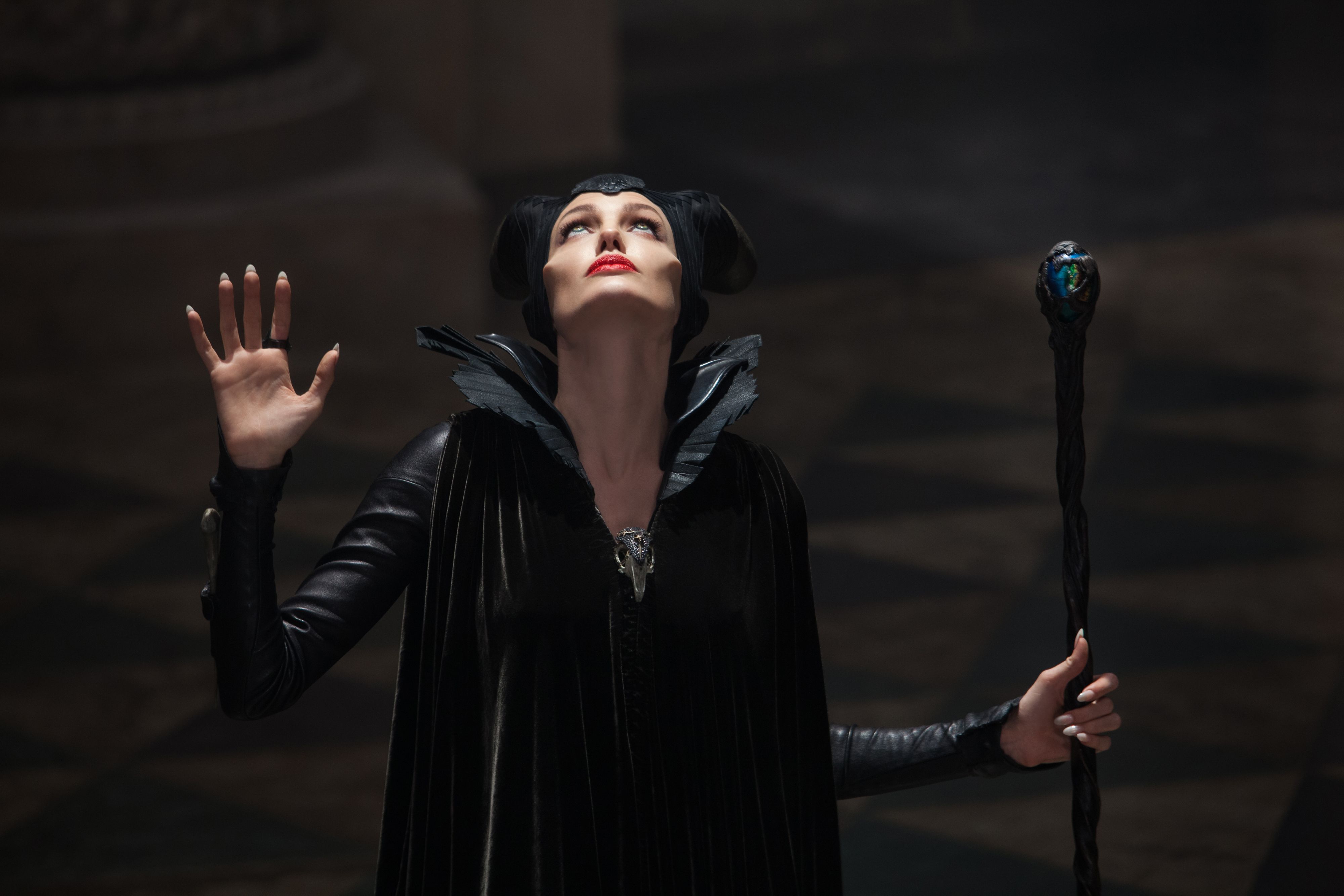
Los Angeles: Disney reported that Angelina Jolie will return to the role in Maleficent 2, although the release date has not been set. Screenwriter Linda Woolverton, who penned the script the first Maleficent will be back to write the sequel.
Maleficent 2 joins a slate of forthcoming Disney live-action sequels and remakes that draw on the studio’s animated back catalogue. Screenwriter Linda Woolverton, who worked on the first film, will return for the follow-up.
Maleficent grossed $758m at the global box office, but received middling reviews. Disney released no further details about the Maleficent sequel in its announcement on Monday. The original film, directed by Robert Stromberg, fleshed out the tragic back-story of the character that was introduced in the studio’s 1959 animated musical Sleeping Beauty.
Disney also confirmed that it has cast Emma Stone to play the Disney villain Cruella de Vil in an origins story about the hound-hating star of the 101 Dalmatians movies titled Cruella. The studio is also producing new versions of Tinker Bell (with Reese Witherspoon), Dumbo (with Tim Burton directing) and Mary Poppins (with Emily Blunt). A sequel to current hit Jungle Book will also proceed with original director Jon Favreau set to return.
The 2014 film, directed by Robert Stromberg was loosely based on Charles Perrault’s original fairy tale and inspired by Walt Disney’s 1959 animated film, Sleeping Beauty. It portrayed the story from the perspective of the eponymous antagonist, depicting her conflicted relationship with the princess and the king of a corrupt kingdom. It starred Elle Fanning in the role of Princess Aurora, the Sleeping Beauty and Angelina Jolie (Isobelle Molloy as the younger version) as Maleficient.


Tuesday, 26 April 2016

Two Bangladeshi Gay Rights Activists Hacked to Death

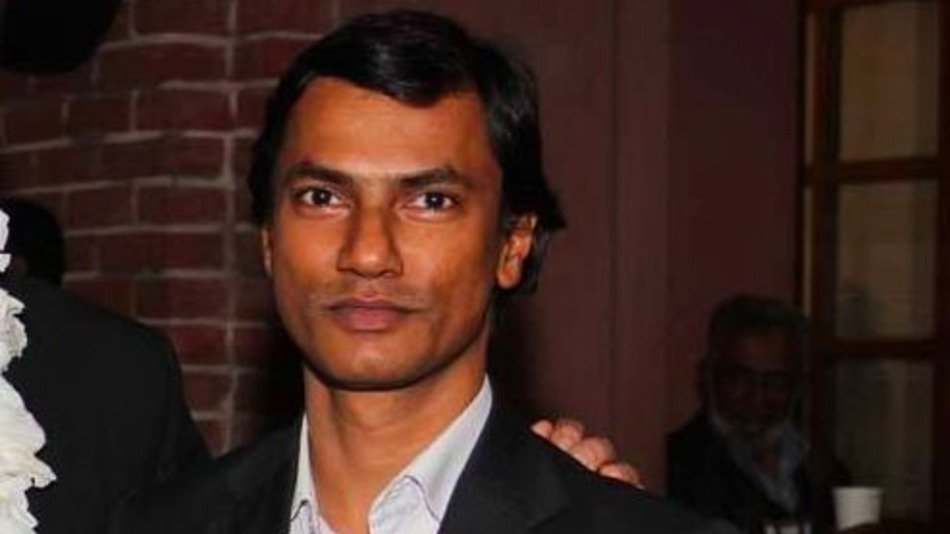
Dhaka: Two people, including the editor of a magazine for the transgender community, have been hacked to death in the capital of Bangladesh.

A third person, a security guard at the apartment building where the killings took place, was seriously wounded in Monday’s attack in Dhaka, in which six attackers murdered Julhas Mannan and Tanay Mojumdar. Mannan was the editor of Rupban, the only LGBT magazine in the country, and he had previously worked at the US embassy in the city.
Maruf Hossain Sorder, a Dhaka Metropolitan Police spokesman, said: “Unidentified attackers entered an apartment at Kalabagan and hacked two people to death.”
The incident came two days after a university professor was killed in similar fashion in an attack in Rajshahi, which was claimed by the Islamic State of Iraq and the Levant (ISIL, or ISIS) group.
Homosexuality is technically illegal in Bangladesh and remains a highly sensitive issue in society.
Both men were openly gay and believed that if more gay Bangladeshis came out then the country would have to accept them.
They were also behind the annual “Rainbow Rally”, held on Bengali New Year, 14 April, since 2014. This year’s rally was banned by police as part of widespread security measures.
Meanwhile Bangladesh’s best known blogger said he had received a death threat on Sunday.
Last year, at least four atheist bloggers and a secular publisher were hacked to death in a long-running series of killings of secular activists.
The South Asian country has seen a surge in violent attacks over the past few months in which liberal and secular activists, members of minority Muslim sects and other religious groups have been targeted.


Saturday, 23 April 2016

At 9500-Year-Old, Meet ‘Old Tjikko’ - The World’s Oldest Tree

Imagine a single living organism older than Jesus and the pyramids. It was born during the last Ice Age and has lived through man’s creation of the wheel and the destructive wars of the 20th century.

It isn't a mythological creature, but rather a tree. In fact, it is a standard Norwegian Spruce, a species that is frequently used as a Christmas tree today.
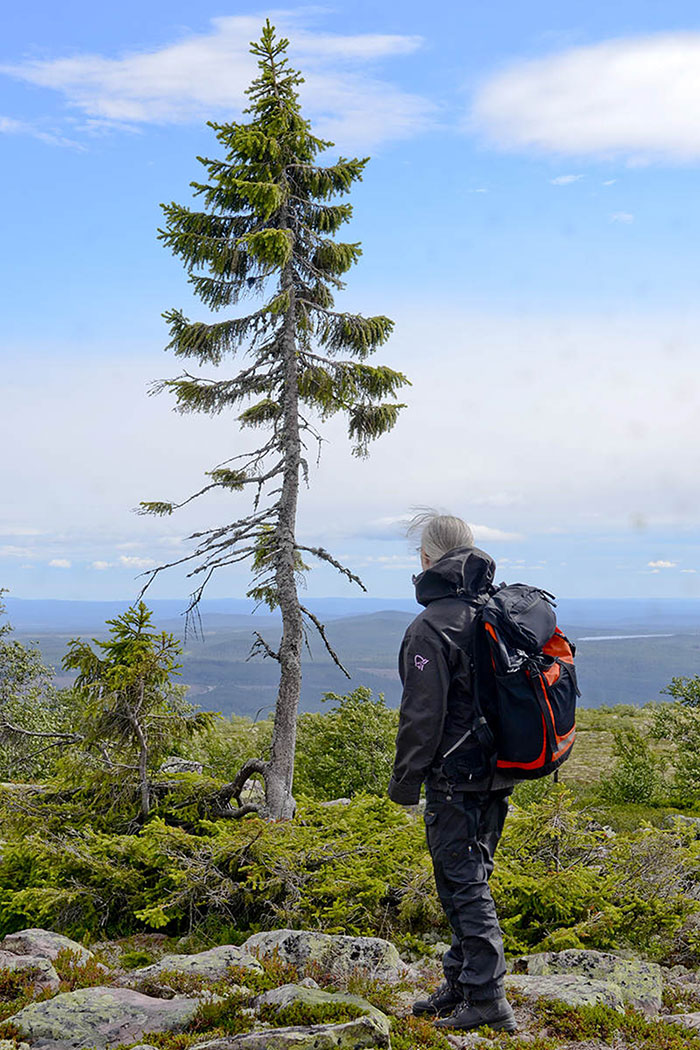
The ‘Old Tjikko’ was discovered in 2004 by Leif Kullman, a professor at Sweden’s UmeĆ„ University. The lone conifer sits in the Dalarna Province in the mountains of central Sweden. The visible portion of the tree is 13-feet-tall, scraggly and fairly young (the spruce’s trunks have a lifespan of only around 600 years, according to Kullman), but what is below makes ‘Old Tjikko’ unbelievable.

According to Kullman's team, the tree’s root system has been growing for 9,550 years, placing its start date at the beginning of the last Ice Age. The incredible lifespan is thanks to the plant’s ability to clone itself. As soon as one stem dies, another can take its place. ‘Old Tjikko’ started growing around 7540 B.C.
The ‘Old Tjikko’ has been recognized as the world’s old individual living tree, but the title is a little murky thanks to the cloning process. Pando, a forest in Utah, started with a single quaking Aspen tree that spread into colony of over 40,000 genetically identically stems that share the same roots. It now covers 106 acres and weighs 13 million pounds. Experts say Pando’s genetic makeup could be from 80,000 to one million years old

’As AOL news say, ‘Old Tjikko’ has been growing throughout mankind’s greatest accomplishments and darkest periods, including the invention of wheels, the death of last wooly mammoths, the beginning of the first Chinese dynasty, the birth of Olympic games, the birth of Lord Jesus, the crumbling of Roman Empire, the birth of Prophet Muhammad, the two World Wars, among others.